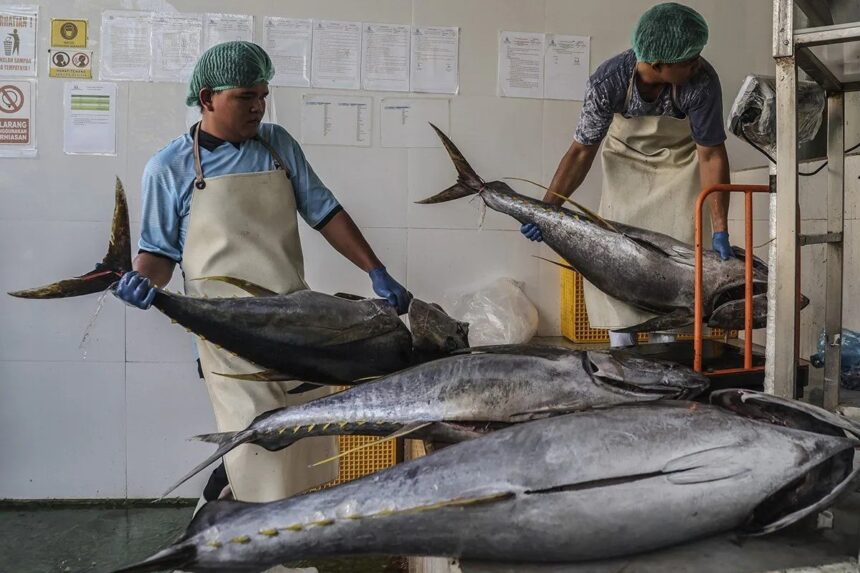
Strategic Initiatives For Indonesian Seafood Global Export Growth
The Indonesian Ministry of Maritime Affairs and Fisheries is launching an ambitious roadmap to significantly strengthen its seafood export sector throughout 2026 by helping local businesses navigate complex international trade landscapes. This strategy is designed to ensure that small and large scale operators can successfully meet the rigorous new certification requirements mandated by major economic powers such as the United States and the European Union.
By providing direct assistance with EU catch certificates and specialized processing statements, the ministry aims to eliminate technical barriers that have previously hindered market entry for seafood producers. Officials have emphasized that maintaining superior product quality and safety is no longer optional but a fundamental requirement for staying competitive in the modern global economy.
This push for excellence is paired with a strong focus on sustainability, ensuring that the harvest of premium seafood products does not compromise the long term health of the nations marine ecosystems. As international buyers increasingly prioritize ethical sourcing, Indonesia is positioning itself as a reliable partner. These efforts are expected to solidify the countrys reputation for high grade marine exports.
Navigating International Trade Regulations And Tariff Agreements
A critical component of the 2026 strategy involves deep diplomatic negotiations to secure approval for specific fishing methods and to reduce the financial burden of high import duties. The ministry is currently working closely with the National Oceanic and Atmospheric Administration to resolve comparability findings related to gillnet caught crab, a move that is essential for preventing costly delays at American ports.
This proactive engagement ensures that Indonesian seafood continues to flow smoothly into the United States, which remains the largest single market for the countrys fishery products. Beyond the American market, exporters are being encouraged to take full advantage of the zero percent tariffs under the Indonesia Japan Economic Partnership Agreement, particularly for processed tuna and skipjack.
These favorable trade terms are set to take effect after the first quarter of 2026, offering a significant competitive edge over regional rivals. To further diversify the destination of these goods, the government is also hosting trade missions and business matchmaking events. By weaving together high quality production and trade diplomacy, the ministry is creating a resilient network for seafood exporters.
Economic Performance And Future Market Expansion Goals
The economic impact of the nations fishery sector has shown remarkable resilience, with recent data showing that exports reached a total value of over six billion dollars last year. This represents a healthy increase of over five percent, driven largely by the massive demand for frozen and processed shrimp in the American market.
The national statistics agency has confirmed that the fishery trade surplus continues to grow, providing a vital source of foreign exchange and supporting thousands of livelihoods in coastal communities. As the ministry looks toward the future, it is focused on expanding the global footprint of Indonesian seafood into emerging markets across Eurasia and Latin America where demand is rising.
These efforts are supported by ongoing tariff reduction talks and international product promotions that highlight the unique flavors and sustainable practices of Indonesian producers. By consistently meeting global standards and leveraging international agreements, the sector is well on its way to surpassing previous records. The commitment to providing safe and high quality seafood ensures that Indonesia will remain a dominant force.
In-Depth Analysis Of Local And Regional Market Impacts
The strategic overhaul of Indonesias fishery export protocols signals a maturing of the nations blue economy, transitioning from a volume driven model to one defined by high value compliance and diplomatic leverage. From a professional financial analysts perspective, the ministrys focus on U.S. and EU certification is a critical de-risking maneuver that protects against the rising tide of non-tariff barriers to trade.
We observe that by internalizing the costs of regulatory compliance through government led assistance programs, the Indonesian state is effectively subsidizing the global competitiveness of its local producers. This is particularly vital in the context of the American market, where any disruption in seafood eligibility could have catastrophic ripple effects on the fiscal health of regional processing hubs in Java and Sulawesi.
The move toward zero percent tariffs for tuna under the IJ-EPA framework is expected to trigger a significant reallocation of capital toward high tech processing facilities, as firms seek to capture the higher margins associated with value added goods. Furthermore, the emphasis on sustainability and comparability findings suggests a long term strategic alignment with the ESG requirements of international institutional investors.
This alignment is likely to lower the cost of capital for Indonesian fishery firms, enabling them to upgrade their fleets and cold chain logistics to meet world class standards. At the regional level, Indonesias aggressive pursuit of new trade agreements in Eurasia and Latin America is likely to challenge the market share of other major ASEAN exporters, sparking a regional competition for quality certification dominance.
As the 2026 strategy unfolds, the synergy between micro-level quality control and macro-level trade diplomacy will be the deciding factor in maintaining the multi-billion dollar trade surplus. We anticipate that the digital integration of catch certificates will not only satisfy regulators but also improve operational efficiency across the domestic supply chain, leading to lower wastage and higher net profitability.
This evolution positions Indonesia not just as a supplier of raw materials, but as a sophisticated leader in the global marine food value chain. Ultimately, the successful implementation of these certification standards will serve as a technical moat, protecting the domestic market from lower-quality competitors while ensuring a premium price point for Indonesian seafood in the worlds most lucrative economies.