Synergy and Strategic Growth in the National Tapioca Industry
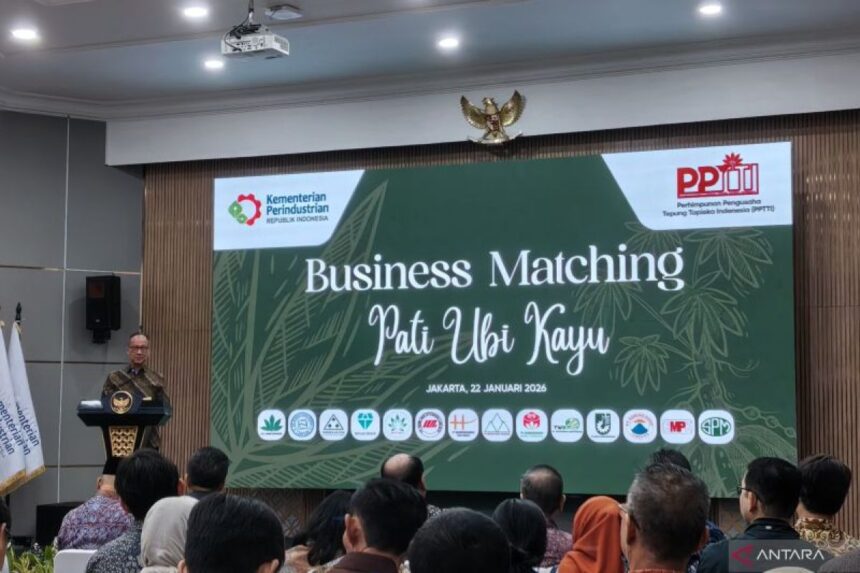
The Ministry of Industry is currently intensifying efforts to harmonize the relationship between domestic producers and large scale industrial consumers to promote a sustainable supply of tapioca within the local market. During a high profile business matching event held in Jakarta, government officials identified this sector as a critical pillar for national economic resilience and import substitution strategies. Indonesia currently hosts approximately one hundred and twenty five processing companies dedicated to this strategic commodity, yet the current industrial utilization rate sits at a relatively low forty three percent.
This gap between potential and actual output presents a significant opportunity for growth, especially as the demand for starch remains high across multiple sectors. By focusing on the intrinsic value of the cassava derivative, the government aims to transform the domestic landscape into a self sufficient powerhouse that can meet the rigorous demands of both food and non food applications. This strategic push is not merely about increasing volume but also about ensuring that the quality of the starch produced by local mills meets the high standards required by global industries.
The goal is to create a seamless link where the raw material harvested from Indonesian soil directly feeds into the manufacturing pipelines of domestic factories, thereby reducing the outflow of capital for foreign goods. The multifaceted nature of this commodity allows it to serve as a vital ingredient in a diverse array of products ranging from sweeteners and seasonings to snacks and noodles. Beyond the food sector, it is an essential component in the manufacturing of paper, chemicals, and ethanol.
Enhancing Competitiveness Through Policy And Technical Innovation
Despite a remarkable fifty eight percent year on year increase in export value reaching over eighteen million dollars by late 2025, the country still faced a significant trade deficit with imports exceeding seventy three million dollars. This imbalance highlights the urgent need for domestic producers to enhance their price competitiveness and technical specifications to match those of international suppliers. Many industrial users currently rely on imported starch because they require specific chemical properties that have been difficult to source locally.
To bridge this divide, the ministry is implementing the Commodity Balance policy, which is designed to align domestic production capacity with the actual quantitative and qualitative needs of the market. Through this regulatory framework, the government expects to boost capacity utilization and encourage local firms to invest in advanced processing technologies that can deliver the high spec products currently being brought in from overseas. The recent business matching initiative serves as a powerful catalyst for producers.
By fostering direct communication between the starch mills and the end users, the Ministry of Industry is creating an environment where technical requirements can be clearly defined and addressed through collaborative research and development. It is essential for the national industry to move beyond basic commodity production and enter the realm of specialized modified starches that command higher market value. This diversification not only helps in capturing a larger share of the domestic market but also positions the country well.
Industrial Sovereignty And Long Term Economic Resilience
The government commitment to strengthening the independence of the national industry is reflected in its support for infrastructure upgrades and the adoption of modern quality control systems. As domestic firms begin to meet the specific requirements of the pharmaceutical and high end food industries, the reliance on imports will naturally diminish, leading to a more balanced trade profile. This shift is expected to revitalize the agricultural communities that provide the raw cassava, creating a positive ripple effect.
Furthermore, the integration of data from the National Industrial Information System and Online Single Submission platforms allows for a more transparent and efficient monitoring of industry performance. This data driven approach enables the government to identify specific bottlenecks in the supply chain and provide targeted interventions where they are most needed. For instance, if a particular region shows high potential for starch production but suffers from poor logistics, infrastructure projects can be prioritized accordingly.
The long term vision is to create a highly integrated industrial ecosystem where every step from cultivation to final processing is optimized for maximum efficiency and minimal waste. By leveraging the abundance of local raw materials and the growing technical expertise of the workforce, the nation can transform its starch industry into a model of modern manufacturing. This transformation will not only achieve the immediate goal of import substitution but will also build a foundation for sustained industrial growth.
In Depth Analysis Of Regional Trade Dynamics And Industrial Self Sufficiency
From a professional financial and analytical perspective, the push to revitalize the national starch industry represents a strategic move to insulate the domestic economy from the volatility of global commodity markets. We interpret the current low utilization rate of forty three percent not as a sign of industrial weakness, but as significant latent capacity that can be unlocked through coordinated policy intervention and capital investment. In the context of the broader Asean market, Indonesia possesses a unique competitive advantage due to its vast agricultural land.
By focusing on the technical requirements of industrial users, the Ministry of Industry is addressing the core issue of quality parity which has long been the primary barrier to import substitution. This transition from a volume based commodity model to a specification based industrial model is essential for improving the sector overall market capitalization and attracting foreign direct investment into specialized processing facilities. We project that the successful implementation of the Commodity Balance policy will lead to a more stable pricing environment.
Moreover, the impact of this industrial synergy extends far beyond the manufacturing sector, as it creates a more robust and transparent market for smallholder farmers. When domestic starch producers operate at higher utilization rates, they provide a consistent and reliable demand for raw cassava, which in turn encourages farmers to invest in better seeds and sustainable farming practices. This vertical integration is a hallmark of a mature industrial economy and is a primary driver of rural poverty reduction and food security.
From a macro-economic standpoint, reducing the seventy three million dollar import bill for starch will significantly improve the national trade balance and strengthen the local currency. We observe that as the domestic industry matures and gains the ability to produce specialized starches, it will also open up new opportunities for high value exports to markets in East Asia and Europe. The focus on business matching and policy synchronization is therefore a critical step in transforming a fragmented traditional industry into a modern asset class.
Ultimately, the success of this initiative will be measured by the degree to which domestic industries can rely on local suppliers for their most demanding technical needs, creating a self sustaining cycle of innovation and economic growth that benefits all stakeholders in the value chain. As industrial users shift their procurement strategies toward the domestic market, we anticipate a sharp rise in regional competitiveness, positioning the archipelago as the primary hub for starch based derivatives in Southeast Asia by the end of the decade.