Delay in Launching Carbon Credit Exchange Necessitates Urgent Policy Action
The establishment of Vietnam’s national carbon market, which hinges on the operationalization of a carbon credit exchange, is facing a delay.
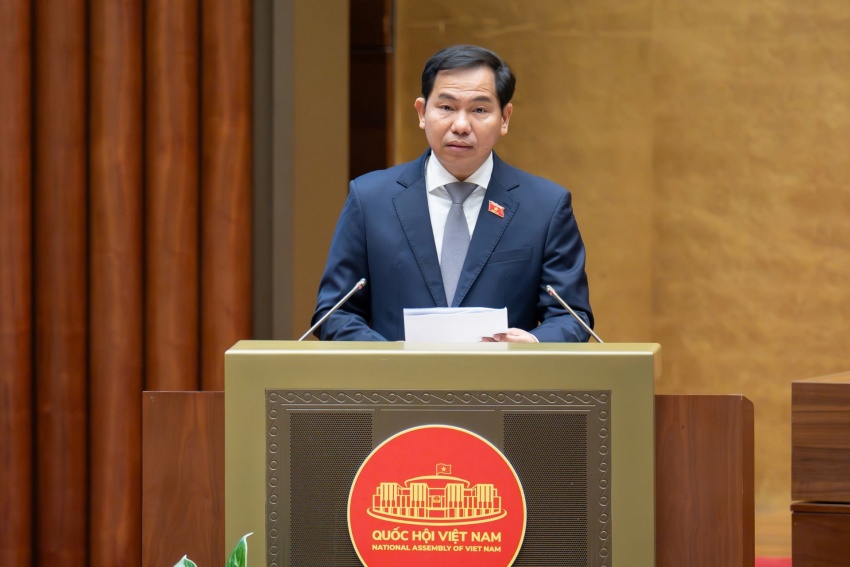
National Assembly General Secretary Le Quang Manh announced this during his report on the implementation of the Law on Environmental Protection (2020) on October 28.
The pilot operation of the carbon credit exchange, a critical component in the nation’s climate strategy, is now projected to commence by the end of next year, pushing back the initial target of 2025.
This exchange is a fundamental mechanism of a carbon market, facilitating the trading of greenhouse gas (GHG) emission rights, which allows various entities—companies and organizations—to purchase credits or specific emission quotas.
This purchasing action serves to offset their existing carbon emissions and aids in fulfilling either voluntary or mandatory reduction targets.
Conversely, the market’s sellers are those entities that possess a surplus of allowances or generate valid carbon credit units through certified emission-reduction projects.
Under the current draft decree governing the domestic exchange, two distinct products are slated for trading: emission quotas and carbon credits.
Furthermore, the Ministry of Natural Resources and Environment is actively preparing a separate draft decree to govern international carbon credit and emission reduction trading, which is expected to be submitted to the government for review later this year.
This move to solidify the regulatory framework underscores Vietnam’s commitment to achieving its net-zero emissions goal by 2050.
Strengthening Infrastructure and Data Systems for a Viable Carbon Market
While Vietnam possesses considerable natural advantages for developing a robust carbon trading market, experts are pointing out significant technical and infrastructural challenges that must be addressed to ensure its viability and fairness.
Ha Hong Hanh, deputy head of the Propaganda and Mass Mobilisation Committee of Khanh Hoa province, highlighted a critical capacity deficit, noting that currently, only two or three domestic centers are equipped to conduct internationally accredited GHG inventories.
Moreover, the essential emission data remains incomplete across numerous economic sectors.
This severe data inadequacy directly impedes the necessary process of accurately setting emission quotas for participating entities and critically hampers the effective verification of reduction outcomes.
She also noted a structural inefficiency where domestic firms that generate carbon credit units are frequently forced to sell these through expensive international intermediaries, a practice that substantially increases transaction costs and severely reduces the actual financial benefits for the producers.
To counteract these limitations, she proposed a multi-pronged approach, starting with a rapid improvement of the overarching legal framework.
This includes finalizing the decrees that govern the operations of the carbon exchange itself and establishing clear rules for the allocation and trading of emission quotas.
Crucially, she called for the creation of a unified, national database for GHG emissions that is interconnected between central government agencies and the private sector.
Lastly, to foster early participation in the nascent carbon credit market, financial support is necessary for small- and medium-sized enterprises (SMEs) to help them cover mandatory auditing and registration fees.
Additionally, pioneering businesses that aggressively pursue emission-reducing practices should be rewarded with targeted incentives, such as tax breaks or preferential access to green credit facilities.
Addressing Widespread Pollution and Enhancing Environmental Infrastructure
Beyond the development of the carbon credit market, NA General Secretary Le Quang Manh outlined several other high-priority environmental protection tasks.
Among the immediate actions, Vietnam is set to issue and implement a new National Action Plan focused on Air Pollution Control and Environmental Quality Management.
Concurrently, urgent measures will be rolled out immediately to curb and mitigate the severe air pollution issues in the country’s two largest urban centers, Hanoi and Ho Chi Minh City.
He further detailed plans to establish a sophisticated, real-time online GHG inventory information system, which will be instrumental in analyzing and reporting emission data with greater efficiency and accuracy.
By the end of 2026, a comprehensive national environmental database is expected to be fully operational and completely interconnected with other national data systems, enabling crucial real-time data sharing among relevant stakeholders.
While the supervisory delegation’s report acknowledged significant overall progress—with three of the five targets set for 2025 already surpassed, including the collection rate of urban solid waste, the percentage of industrial zones with centralized wastewater treatment, and forest coverage—it also highlighted persistent issues.
Environmental pollution remains a complex and acute problem, particularly in major cities where fine dust pollution is a constant, serious concern, at times causing Hanoi and Ho Chi Minh City to rank among the most polluted urban areas globally.
Furthermore, the essential infrastructure for environmental protection, particularly for the collection and treatment of solid waste and urban wastewater, is outdated and woefully insufficient, with only approximately 18 per cent of total urban wastewater currently being collected and treated.
This gap is further evidenced by the fact that nationwide, only a small fraction of industrial clusters (31.5 percent) and craft villages (16.6 percent) have invested in centralized wastewater treatment systems that adhere to national environmental standards.