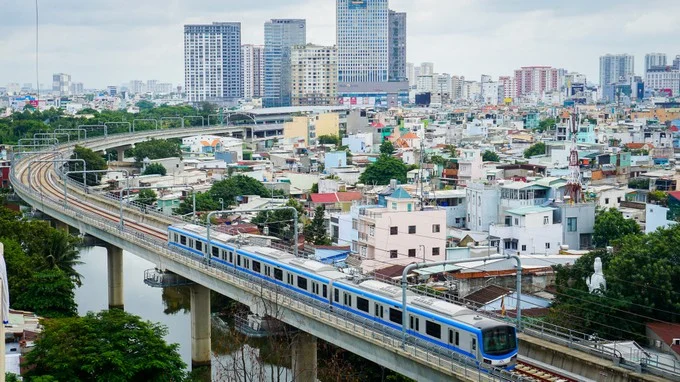
Strategic Expansion Of The Urban Railway Network In HCMC
The recent proposal by the People’s Committee to expand the urban railway network marks a historic shift for HCMC as it seeks to integrate its newly merged territories. By adding five critical metro lines to the legislative framework of Resolution No. 188, the city is positioning itself to handle the immense development needs following its administrative union.
This strategic move is not merely about laying tracks but about creating a high-capacity and environmentally friendly transport spine for a mega-city that now encompasses diverse industrial hubs. The proposed lines including the Binh Duong New City-Suoi Tien and the Vung Tau-Ba Ria-Phu My routes are scheduled for implementation during the medium-term phases through 2035.
Investment models will leverage both public funds and public-private partnerships to ensure the financial viability of these massive infrastructure undertakings across the region. As the city master plan is updated the flexibility granted by the amended Resolution No. 98 allows for a more agile response to the rapid urbanization occurring at the gateways.
The administrative merger with Binh Duong and Ba Ria-Vung Tau provinces has created a necessity for a unified transit system that can support a population of over twenty million people. By synchronizing the railway planning with the national Vision 2050 the local authorities are ensuring that the new urban railway network remains relevant for decades to come.
Furthermore the integration of special mechanisms under the Railway Law allows for streamlined land acquisition and faster environmental impact assessments for these five routes. This regulatory agility is expected to reduce the typical delays associated with large-scale transport projects in the region while attracting more high-quality construction partners.
Integrated Connectivity Between Airports And New Administrative Hubs
A core objective of this railway revolution is the urgent need for connectivity between major international gateways and the primary urban centers of the newly formed metropolis. The Thu Thiem-Long Thanh line has been specifically transitioned to a dedicated urban railway to better serve the localized needs of the city and Dong Nai province.
This route will run parallel to the high-speed rail and expressway corridors crossing the Dong Nai River to link the bustling Thu Thiem station directly with the airport. Similarly the extension of the existing Ben Thanh-Suoi Tien line will play a pivotal role in connecting the central business district with the new provincial administrative center.
By stretching over 41 kilometers this extension maximizes the operational efficiency of the upcoming airport while fostering a robust logistics and tourism ecosystem. The transit-oriented development model will be utilized to create compact high-value urban spaces around metro stations reducing traffic congestion on perennially overloaded road corridors.
The route for the airport extension has been meticulously planned to pass through high-density residential areas ensuring that the passenger load remains high and consistent. Station locations were selected based on their proximity to emerging commercial zones and existing public services to provide the greatest possible utility to the daily commuter.
This dedicated link to Long Thanh International Airport is vital because it addresses the projected surge in air passenger traffic as the city becomes a regional aviation hub. By offering a predictable and rapid transit time the airport line will improve the overall travel experience for international tourists and business executives arriving in the city.
Regional Integration And Economic Synergy Through Modern Transit
The broader impact of these metro lines extends into the heart of the surrounding provinces creating a unified economic axis that drives industrial and service development. Line No. 1 connecting Binh Duong New City to Suoi Tien will synchronize with the existing metro infrastructure that became operational in late 2024.
Meanwhile Line No. 2 will establish a central radial corridor from Thu Dau Mot to Hiep Binh Phuoc providing a modern alternative for commuters facing current bottlenecks. Line No. 3 which stretches from Vung Tau through Ba Ria and Phu My is designed to support the establishment of a free trade zone in Cai Mep Ha.
By offering a high-quality living environment these transit projects are redefining what it means to live and work in the southern key economic region of the country. The shift toward a multi-modal transport network is a clear signal to global markets that the region is ready for a new era of industrial sophistication and sustainability.
The connection between Thu Dau Mot and central Saigon will facilitate a more fluid exchange of labor between the high-tech industrial parks and the urban service sector. This synergy is expected to boost the regional productivity as travel times are reduced and the cost of commuting for the average worker becomes more affordable over time.
Moreover the development of the coastal growth axis through the Vung Tau line will open up new opportunities for sustainable tourism and high-end residential projects. By providing a safe and clean transport alternative the city is encouraging a shift away from private vehicle use which will have long-term benefits for the urban environment.
Market Analysis Of Regional Transit Impact On Real Estate And Logistics
From a financial perspective the expansion of the metro network represents a fundamental rerating of the real estate and logistics sectors across the southern economic focal point. The transition toward a Transit-Oriented Development model acts as a powerful catalyst for capital appreciation as land values surrounding the proposed stations are expected to see significant premiums.
We observe that the conversion of the Thu Thiem-Long Thanh route into an urban railway provides the local government with greater autonomy to capture land value along the corridor. This de-risks the public investment model by creating a self-sustaining cycle of urban growth and revenue generation that can be reinvested into further infrastructure phases over time.
In the logistics sector the connection to the Long Thanh International Airport and the Cai Mep Ha free trade zone addresses a critical inefficiency that has hindered export-led growth. By providing a high-capacity alternative to congested highways the metro system will lower operational costs for manufacturers and international tourism operators throughout the entire metropolitan area.
Institutional investors should note that the administrative merger of these provinces simplifies the regulatory environment allowing for more cohesive regional planning and faster project implementation. This infrastructure surge is not merely a transport upgrade but a strategic repositioning of the region as the premier industrial and service hub of Southeast Asia for the future.
The creation of a unified master plan for the newly merged city allows for the optimized allocation of resources and the prevention of redundant infrastructure development. As the various metro lines begin to intersect they will form a network effect that increases the value and utility of each individual line far beyond its original isolated design.
Long-term economic projections suggest that this infrastructure investment will lead to a significant increase in the regional gross domestic product as logistics bottlenecks are removed. By providing a clear roadmap for the next decade the People’s Committee is offering a high degree of certainty for both domestic developers and international capital funds.