The Escalating Impact Of Global Oil Shock On Domestic Growth
The Philippine economy is currently struggling under the immense pressure of an Iran war oil shock, causing national consumption and development to plummet to their weakest levels in over a decade. The sudden energy choke resulting from the US-Iran standoff has left the Southeast Asian nation uniquely vulnerable compared to its regional neighbors. This vulnerability is primarily rooted in the fact that the Philippines relies on the Middle East for two-thirds of its petroleum supply, making any disruption in that region a direct threat to domestic stability. On Thursday, May 7, economic data revealed that the economy expanded by a mere 2.8% last quarter, a figure that falls significantly below earlier estimates and represents the slowest pace of growth outside of the pandemic era since late 2009.
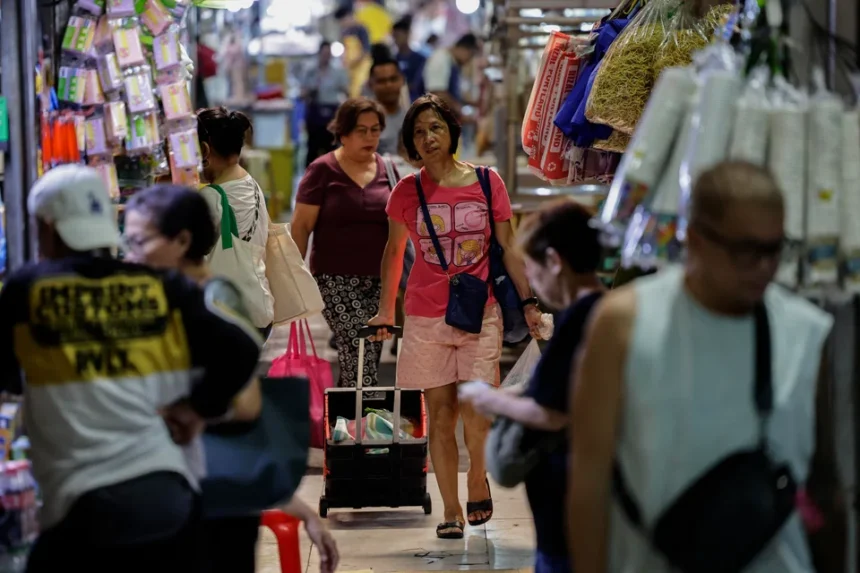
Household spending has also hit a critical low, marking the weakest performance since 2010 as families across the archipelago struggle to keep up with soaring costs. With inflation now running at its fastest rate in three years, the administration of President Ferdinand Marcos Jr and the central bank are facing a limited set of options to contain the worsening damage. The government is caught between the need to increase spending to shield vulnerable households and the necessity of further tightening monetary policy following recent rate hikes. This difficult balancing act is further complicated by the looming threat of El Nino, which could potentially drive up food prices and exacerbate the existing financial strain on the populace.
Regional Performance Gaps And The Burden Of Energy Imports
While other nations in the region like Vietnam, Indonesia, and China continue to show more resilience, the Philippines remains acutely affected by the global oil shock because it must import more than 90% of its total fuel requirements. Economic Planning Secretary Arsenio Balisacan noted during a recent briefing in Manila that the current growth performance reflects a combination of significant domestic hurdles and volatile global challenges. The most substantial factor remains the Middle East conflict, which has caused oil prices to spike globally and disrupted the essential energy choke points that the country depends on. Beyond the energy crisis, the Philippines began the year in a precarious position due to a massive corruption scandal involving flood-control projects, which severely dented public confidence.
Investment fell by 3.3% last quarter, while industrial production edged down slightly, indicating a broad cooling of the business climate. Economic analysts suggest that the nation is now at the highest risk in the region of entering a period of stagflation, characterized by an unfortunate mix of stagnant growth, high inflation, and rising unemployment. This dismal economic environment arrives at a time when the Philippines is hosting leaders from the Association of Southeast Asian Nations to discuss regional resilience. The regional fallout from the ongoing conflict has led to a significant increase in fuel and energy costs, which is expected to feed into agricultural inputs and basic commodities, further straining the budgets of everyday consumers and small businesses alike.
Fiscal Limitations And The Road To Economic Recovery
The central bank currently finds itself with very little room to support the broader economy due to the continued weakness of the peso and surging consumer prices caused by the persistent oil shock. Since the announcement of a probe into the misuse of flood-control funds, growth and investment have slowed dramatically, with the annual gross domestic product slumping to 4.4%. This pace is the weakest seen in more than ten years, excluding the unique circumstances of the pandemic, suggesting that fiscal stimulus alone may not be enough to uplift the economy. Economists warn that monetary tightening, while intended to control inflation, does not address the underlying supply shock and could seriously jeopardize the country’s recovery.
The lingering effects of the corruption controversy continue to weigh heavily on business and investor confidence, while delays in the national budget have slowed the rollout of critical infrastructure programs. There is a visible pattern of sharply slowing consumption growth that began late last year, even as interest rates and inflation fluctuated. This suggests that the double impact of domestic governance issues and the oil shock is creating a persistent drag on the nation’s financial health. To navigate this crisis, the government must find a way to stabilize energy supplies while restoring the trust of international investors who have become wary of the local market. The road to recovery will require a highly synchronized effort between fiscal planners and monetary authorities.
Strategic Energy Vulnerability And Institutional Risk Analysis
From an institutional perspective, the current oil shock exposes a profound structural misalignment in the Philippine energy security framework, which effectively functions as a multiplier for regional geopolitical risk. While peer nations like Indonesia and Vietnam have leveraged domestic production or more diversified supply chains, the Philippines’ 90% dependency on Middle Eastern crude creates an immediate transmission mechanism for external price volatility into the domestic consumer price index. This vulnerability is not merely a byproduct of geography but a result of historical underinvestment in strategic fuel reserves and renewable transition pathways. Consequently, the local equity market is experiencing a significant risk-premium adjustment as investors recalibrate the long-term profitability of energy-intensive industries, leading to the 3.3% contraction in investment realization.
The intersection of this energy crisis with the current domestic fiscal paralysis creates a unique stagflationary trap that differentiates the Philippines from its ASEAN counterparts. The central bank’s limited maneuverability is exacerbated by a weakening peso, which increases the nominal cost of energy imports and creates a self-reinforcing cycle of currency depreciation and imported inflation. For a sustainable recovery, the regional market impact must be addressed through a radical restructuring of the sovereign energy strategy. This includes accelerating the development of the Malampaya gas field and other indigenous sources to decouple the national growth trajectory from the Strait of Hormuz. Without such structural reforms, the Philippine economy remains a hostage to global headlines, where any marginal escalation in foreign conflicts translates into a direct erosion of domestic industrial competitiveness.
Furthermore, the erosion of household purchasing power, currently at a fifteen-year low, suggests that the traditional consumption-led growth model of the Philippines is facing a critical inflection point. As discretionary income is diverted to cover basic energy and transport costs, the retail and services sectors, which are the primary engines of the local economy, will likely face prolonged stagnation. Analysts should anticipate a secondary wave of credit tightening as banks deal with rising non-performing loans in the small and medium enterprise sector, which is most exposed to rising operational costs. The resolution of the ongoing corruption probes is also vital; until transparency is restored to government spending, the fiscal multiplier of any state intervention will remain muted. The Philippines is currently navigating a defining economic test where institutional integrity and energy independence will be the only viable shield against future global disruptions.