Private Retailers Agree to Collaborative Fuel Import Scheme with Pertamina
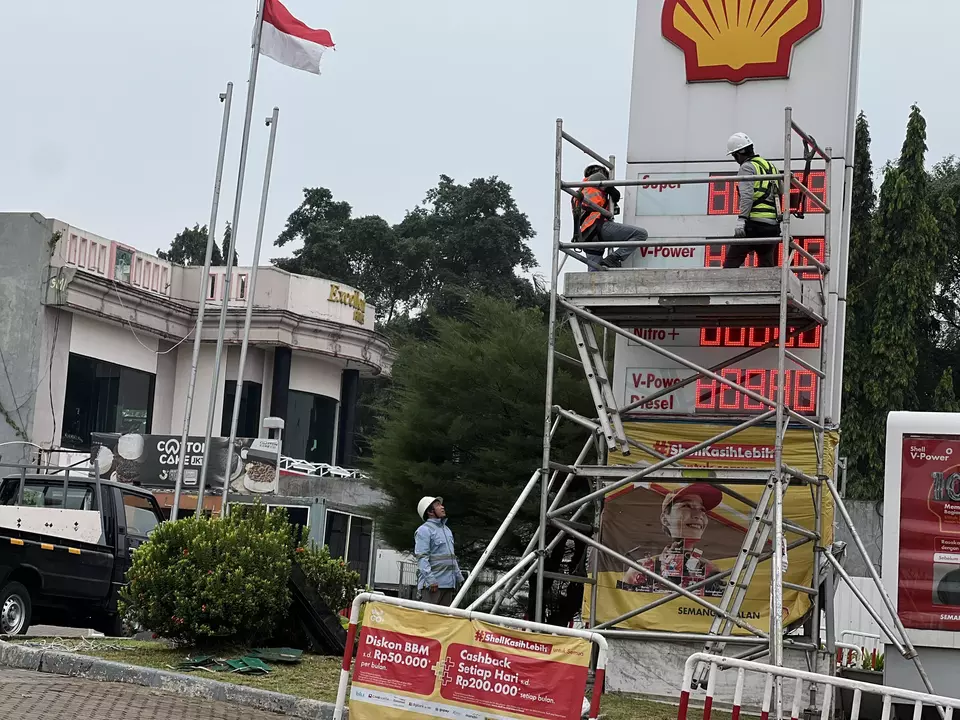
Indonesia’s Energy and Mineral Resources Minister, Bahlil Lahadalia, announced Friday that private fuel retailers, including Shell, Vivo, BP, and ExxonMobil, have agreed to a new collaboration scheme for purchasing additional fuel imports from the state-owned energy company, Pertamina.
This agreement followed a high-level meeting between the government, Pertamina, and the private retailers held in Jakarta.
Minister Bahlil informed reporters, “They agreed, and indeed must agree, to buy and collaborate with Pertamina,” signaling a major shift in the country’s downstream oil and gas logistics.
Under this newly established scheme, private operators will no longer independently source all their products.
Instead, they will purchase base fuel, or the unblended product, directly from Pertamina.
They will then transport this base fuel to their own facilities, where they will mix it with their proprietary additives before distributing it to consumers.
To ensure fairness and transparency in the process, the participating retailers requested joint surveys of all purchases and a commitment to full transparency in pricing mechanisms.
Bahlil emphasized the government’s intention to ensure a fair playing field, stating, “We want both Pertamina and the private sector to benefit fairly. Everything must be transparent, and they have agreed to an open-book approach.”
The government anticipates the initial supply of this new imported fuel to arrive within seven days, with the precise volume allocated to each operator to be finalized during a subsequent technical meeting.
This significant regulatory move comes shortly after private retailers nearly exhausted their previously granted additional 10 percent import quota earlier this year, a situation that had led to reports of shortages at some private stations across the country.
Critics Warn of Monopoly Risks in Centralized Fuel Imports
While the government touts the new arrangement as a collaborative solution to supply shortages, critics and energy economists warn that the policy is essentially a veiled attempt to centralize all fuel imports under Pertamina, a move that could ultimately strip foreign players of their independence and lead to near-monopoly control.
The government’s plan to effectively centralize all fuel imports under Pertamina has been internally dubbed the “one-gate” system, and observers warn that it could have far-reaching and detrimental consequences for market competition.
Fahmy Radhi, a prominent energy economist at Universitas Gadjah Mada, voiced significant concerns, arguing that the new policy would effectively remove the ability of foreign players like Shell and BP to independently source supplies for their networks.
“With one-gate imports, foreign stations will lose that flexibility. They would have to buy fuel directly from Pertamina at prices it sets, cutting into their margins and potentially making operations unprofitable,” Fahmy cautioned.
He further warned that if these sustained losses were to continue, the international brands could eventually be driven out of the market.
Such an outcome would leave Pertamina with near-monopoly control over the downstream oil and gas distribution sector, reducing consumer choice and potentially slowing down market innovation.
This centralization of the fuel supply chain under a state-owned entity is seen by some as a protectionist measure that risks contradicting the spirit of a competitive, open market.
Pertamina Denies Lobbying Claims Amidst Transparency Push
Amidst the implementation of the new fuel import scheme, Pertamina has been forced to publicly deny allegations that it actively sought to restrict the import permits of its private competitors, emphasizing that its focus remains on enhancing transparency and service quality.
Pertamina has strongly rejected any suggestion that it is responsible for the recent reported shortages at private stations across the country, publicly defending its actions and governance.
At a parliamentary hearing held on September 11, Pertamina President Director Simon Aloysius Mantiri addressed the controversy directly.
He explicitly denied allegations that the company lobbied the Ministry of Energy and Mineral Resources (ESDM) to either delay or restrict the import permits and quotas for private retailers.
“Suggestions that Pertamina asked ESDM to withhold import quotas from private gas stations are completely untrue,” Simon stated, aiming to firmly dispel the rumors and accusations of anti-competitive behavior.
The company is navigating a complex public relations environment where it is simultaneously implementing a government-mandated centralized supply system while trying to maintain public and regulatory confidence in its competitive ethics.
Despite the controversy, the new collaboration agreement signals a government-led effort to manage national fuel supply and security more tightly, even as it raises questions about the long-term competitiveness and structure of Indonesia’s downstream energy market.
The push for “open-book” transparency by the private retailers suggests their priority is to mitigate the risk of being forced to buy expensive base fuel from their state-owned competitor.