Fiscal Disipline Targets And National Strategic Financial Frameworks
The formulation of long-term sovereign economic policies across high-growth developing markets requires a delicate balance between ambitious development investments and prudent financial management. During an important legislative session, the administration outlined strategic measures to keep the upcoming state budget deficit securely below 2.5% of the total gross domestic product. By targeting a formalized fiscal envelope between 1.80% and 2.40% for the 2027 draft budget, the executive branch aims to reassure global sovereign credit rating agencies and international capital markets of its enduring commitment to absolute fiscal discipline.
Maintaining a reduced national budget deficit is a vital policy goal because excessive sovereign borrowing can inadvertently trigger local currency depreciation, crowd out private corporate investments, and increase long-term interest burdens on national debt portfolios. This strategic fiscal framework ensures that public funding allocations remain firmly rooted in realistic monetary foundations, protecting the broader macroeconomic ecosystem from sudden inflationary pressures and speculative currency market adjustments. Institutional wealth managers and regional investment strategists view this defensive fiscal positioning as a positive structural signal that reinforces the state’s capacity to absorb international external trade shocks while driving domestic growth forward.
State Revenue Projections And Sovereign Priority Spending Priorities
Successfully managing a large-scale national development agenda requires a well-optimized tax architecture operating alongside highly targeted infrastructure investment plans. Financial planners project total state revenue collections for the upcoming fiscal cycle to settle within a precise range of 11.82% to 12.40% of gross domestic product, depending on international commodity price cycles and localized corporate tax compliance improvements. Concurrently, to support massive structural updates and national development projects, total state expenditures are forecasted to expand between 13.62% and 14.80% of national economic output.
By properly managing this calculated revenue gap, the central leadership can efficiently finance crucial social safety nets and modern supply chain networks without letting the underlying budget deficit expand beyond sustainable operational limits. This balanced approach to public accounting allows the administrative framework to provide deep structural resources to high-priority industrial sectors while keeping public leverage ratios well below critical legal thresholds. Consequently, domestic manufacturing fields can look forward to continuous utility expansions, improved logistics pathways, and reliable local demand structures, laying down a highly predictable operational foundation for multi-layered corporate growth across adjacent production zones.
Constitutional Commitments And Historical Fiscal Governance Paradigms
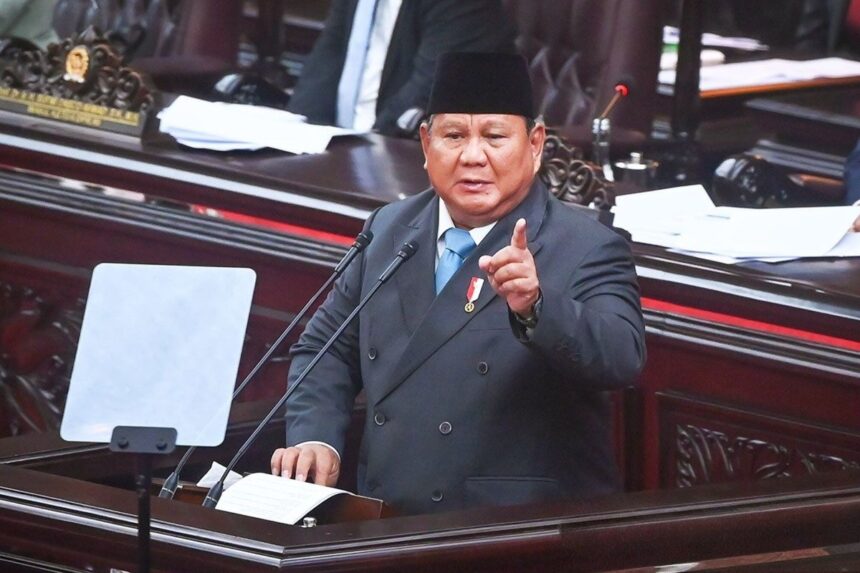
Modern public finance documents function as comprehensive blueprints for social engineering, national security preservation, and long-term societal progress. The administration views the complete financial strategy not merely as a rigid ledger of state income and expenses, but as a dynamic mechanism to shield vulnerable communities from market volatility, strengthen financial systems, and accelerate future commercial expansion. Reflecting this institutional perspective, the head of state took the unprecedented historic step of directly presenting the preliminary Macroeconomic Framework and Fiscal Policy Principles before a full assembly of national lawmakers, highlighting the high priority placed on transparent governance.
This coordinated political alignment ensures that legislative representatives and executive ministries operate under a unified economic vision, reducing typical political gridlock during final budget approval processes. By binding the country’s multi-year fiscal targets to explicit constitutional ideals, the government signals to international portfolio managers that its commitment to preventing a runaway budget deficit remains entirely independent of shifting political conditions. This institutional consistency provides a vital layer of long-term predictability, protecting local consumer purchasing fields and assuring corporate boardrooms that sovereign investment policies will remain exceptionally stable over the coming decade.
Sovereign Debt Sustainability And Regional Asset Allocation Dynamics
The strict containment of a nation’s fiscal imbalance serves as the primary anchor for maintaining high capital market elasticity within the competitive ASEAN economic landscape. Historically, emerging economies that allowed their baseline expenditures to outpace revenue collection suffered from structural interest rate shocks, forcing central banks to implement aggressive monetary tightening measures that ultimately choked off early-stage corporate expansion. By keeping the annual budget deficit constrained within a tightly regulated window, the treasury can successfully lower the country’s sovereign risk premium, allowing local corporate entities to secure international financing at highly competitive interest rates.
Furthermore, a well-managed public deficit provides a powerful fiscal buffer that allows the government to deploy emergency stimulus funds during global trade slowdowns without risking a major sovereign credit downgrade. As global supply networks continuously adjust to shifting international commerce rules, international manufacturing enterprises heavily prioritize locating their primary production hubs in countries that display high levels of fiscal transparency and low sovereign balance sheet risks. Over the medium term, equity research groups expect this strong financial discipline to accelerate industrial park developments and digital infrastructure investments, as multinational firms feel confident that local tax rules will not suddenly change to cover unexpected public debt shortfalls.
For infrastructure strategists and policy analysts, the critical performance indicators to track across the next fiscal periods will be the actual domestic tax collection velocity and the specific efficiency of state expenditure delivery. These core financial indicators will ultimately dictate the speed of non-commodity economic diversification and establish the structural floor for long-term private sector profitability within a highly integrated global economy. This unified approach to national finance ensures the country remains a premier destination for high-value foreign direct investment, turning fiscal discipline into a powerful tool for sustainable wealth generation.