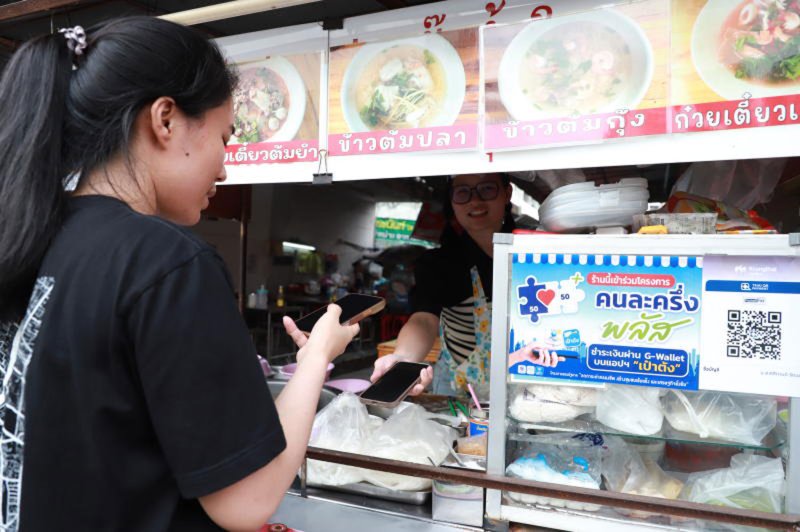
Assessment Of Economic Stimulus And The Co-payment Scheme Utility
The Ministry of Finance has announced the official conclusion of the government’s half-half stimulus program, noting that the co-payment scheme has significantly influenced national spending patterns throughout the final quarter of 2025. This initiative was designed to alleviate the financial burden on citizens by subsidizing daily expenses, and preliminary figures suggest that approximately 19.76 million individuals participated in the program before it closed at 11 PM this past Wednesday. While the outreach was extensive, the data reveals a slight disparity in how participants engaged with their allotted benefits, as roughly 9.21 million people fully exhausted their entitlements.
Conversely, more than 10.5 million users did not utilize the entirety of their funds, leading to approximately 2 billion baht in unused capital being returned to the state coffers. Despite this surplus, the sheer volume of transactions processed during the operational period underscores a high level of public interest in shared financial responsibility models. The fiscal policy office reported that total spending reached an impressive 84.18 billion baht, showcasing the massive scale of liquidity injected into the marketplace.
This capital was distributed across a vast network of nearly one million registered merchants, ranging from local general stores to digital food delivery platforms. By requiring participants to provide half of the transaction value, the program ensured that government support was met with private consumption, creating a balanced approach to market stimulation that prioritized essential goods and services. The success of this model has provided valuable data for future social welfare planning, demonstrating how digital payment systems can be leveraged to distribute state aid effectively.
Strategic Distribution Of Public And Government Expenditure Channels
A detailed breakdown of the spending metrics illustrates the diverse ways in which the national economy benefited from the coordinated injection of funds through both physical and digital storefronts. Public spending accounted for 42.81 billion baht of the total, with the vast majority of those transactions occurring at general stores, while the government co-payment portion contributed another 41.38 billion baht to the domestic product. This nearly equal split highlights the core mechanism of the half-half logic, where state intervention acts as a direct catalyst for private sector activity.
Interestingly, while traditional brick-and-mortar establishments remained the primary beneficiaries, the integration of food delivery platforms into the framework allowed for a significant digital footprint, with combined spending in that category exceeding 3 billion baht. This inclusion reflects a modern understanding of consumer habits and ensures that even home-based businesses and courier services could benefit from the broader economic momentum. As of the program’s end date, there were nearly 999,350 registered merchants across the country, signifying a wide geographical reach that extended into remote provinces.
Among these were approximately 89,799 food and beverage outlets that specifically embraced delivery-based transactions, further solidifying the bridge between traditional commerce and the emerging gig economy. The collaborative effort between small business operators and millions of consumers fostered a sense of national cooperation that went beyond simple monetary exchange. By supporting small-scale vendors, the initiative helped maintain the viability of local marketplaces, which are often the first to suffer during inflationary periods.
Long Term Macroeconomic Impact And Future Growth Projections
The macroeconomic implications of this coordinated fiscal effort are substantial, with financial analysts estimating that the program provided a 0.2% boost to the national economic growth rate for the year 2025. Without this specific intervention, the trajectory of the gross domestic product would likely have been flatter, particularly given the global challenges facing trade and production. The director of the fiscal policy office emphasized that the injection of over 84 billion baht into the system created a powerful multiplier effect that touched multiple sectors including transport, employment, and manufacturing.
By increasing the immediate purchasing power of the population, the state successfully generated improved cash flow for small businesses, which in turn allowed these entities to maintain their staff levels and fulfill their own logistical obligations. This ripple effect is expected to provide continued momentum into the early months of 2026, as the stocks replenished by merchants and the wages paid to workers during the peak of the program continue to circulate through the system.
Beyond the immediate fiscal metrics, the initiative has also served as a large-scale experiment in digital literacy, as millions of citizens became more comfortable using state-linked electronic wallets for daily tasks. This shift toward a cashless society is a secondary but vital benefit that will likely lower the long-term administrative costs of distributing future aid or collecting tax revenue. As the government analyzes the final results, the focus remains on how to transition from temporary subsidies to sustainable long-term growth strategies.
Strategic Analysis Of Structural Stimulus And Regional Market Resilience
From a professional financial and analytical standpoint, the conclusion of this co-payment initiative represents a successful execution of a targeted fiscal multiplier strategy designed to enhance the velocity of money within the domestic ecosystem. We observe that the 0.2% growth contribution is a significant achievement for a program of this duration, especially considering the relatively high percentage of funds that were successfully absorbed by the retail and services sectors. The decision to return 2 billion baht in unused funds to the state treasury reflects a disciplined approach to fiscal management, ensuring that public debt is not unnecessarily expanded by unutilized budget allocations.
Furthermore, the high merchant registration count provides a robust database for future policy interventions, allowing the Ministry of Finance to segment its support by region or industry with greater precision. For investors and businesses, the stability of the household loan growth and the sound asset quality in the banking system during this period suggest that the stimulus successfully prevented a contraction in consumer demand. On an economic level, the focus on small businesses has helped preserve the competitive landscape of the domestic market, preventing the market share consolidation that often occurs when smaller players face liquidity crunches.
As we move through 2026, the primary challenge for the government will be maintaining this level of economic activity without the direct support of a state-funded mechanism. However, the improved digital infrastructure and the increased financial inclusion achieved during the program’s lifecycle provide a strong foundation for organic growth. This transition from state-led support to market-driven resilience will be the defining theme for the financial sector in the coming year, as stakeholders look to capitalize on the strengthened cash flows and expanded digital payment networks established during the stimulus phase.
The regional impact is particularly noteworthy when examining the cross-border implications of stabilized domestic demand. By bolstering the purchasing power of nearly 20 million citizens, the government has inadvertently supported the broader supply chain that feeds into the local retail market. This stabilization reduces the volatility often associated with emerging market currencies and provides a more predictable environment for foreign direct investment. Additionally, the shift toward formalized digital transactions provides the central bank with more granular data on consumer behavior, allowing for more precise monetary policy adjustments in response to global inflationary pressures.